
Modernise without disruption: Rethinking Technology Change in Wealth Management
Over the last 25 years, I've worked with wealth management firms through almost every stage of technology change. I've seen businesses move from paper files to digital records, introduce CRM systems, launch client portals, integrate platforms, automate processes and, more recently, start exploring how AI can help advisers deliver a better client experience.
During that time, I've worked with firms of all sizes, alongside many of the technology providers that support our industry. One thing has become increasingly clear to me.
The wealth management industry has spent the last twenty years buying technology. The next ten years will be about connecting it.
Most firms don't have a shortage of technology. They already have a CRM, back-office system, portfolio management software, planning tools, client portal and a growing number of specialist applications. In many cases, they're good systems that do exactly what they were designed to do.
The challenge is getting them to work together.
As businesses grow, acquisitions happen, regulation changes and client expectations evolve, new systems and processes are added to solve immediate problems. Over time, that can leave firms with technology that's more complicated to change than anyone originally intended.
That's why projects that look straightforward on paper can become expensive, take longer than expected or have wider consequences across the business.
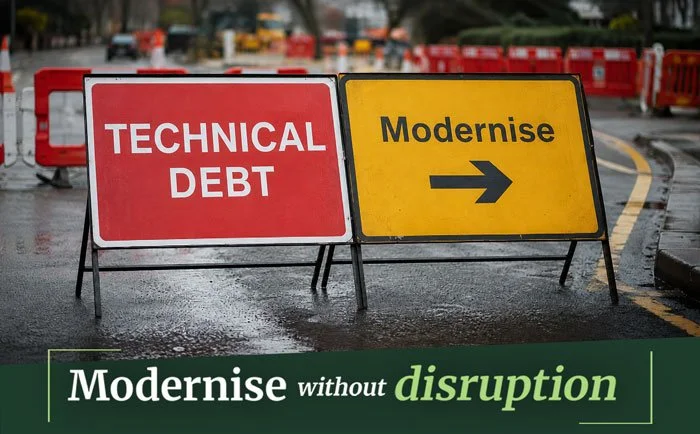
This is what people mean by technical debt.
It's not about poor decisions or outdated technology. Most firms have simply evolved over many years, and their technology has evolved with them.
Why this matters now
The conversations we're having with firms today are very different from those we were having ten years ago. Back then, the focus was usually on selecting new technology. Today, it's much more about making existing technology work better.
Replacing a system will sometimes be the right decision, but it's rarely the first question I'd ask. I'd want to understand how well the firm's existing systems communicate with one another, whether data flows cleanly through the business, and whether manual processes have gradually become accepted simply because "that's how we've always done it."
In my experience, this is where many transformation programmes become harder than they need to be.
Research suggests that around 70% of digital transformation programmes fail to achieve their original objectives, while organisations are spending an increasing proportion of their technology budgets maintaining existing systems rather than improving them. Those statistics should make every leadership team pause before embarking on another major technology programme.
The question shouldn't always be, "What should we replace?"
Sometimes the better question is, "How do we get more from what we already have?"
Why I'm running this webinar
This thinking is what sits behind our Modernise without Disruption webinar.
Rather than focusing on the latest technology trends, I'll be sharing the patterns I've seen after more than two decades working with wealth managers, financial planners, platforms and technology providers.
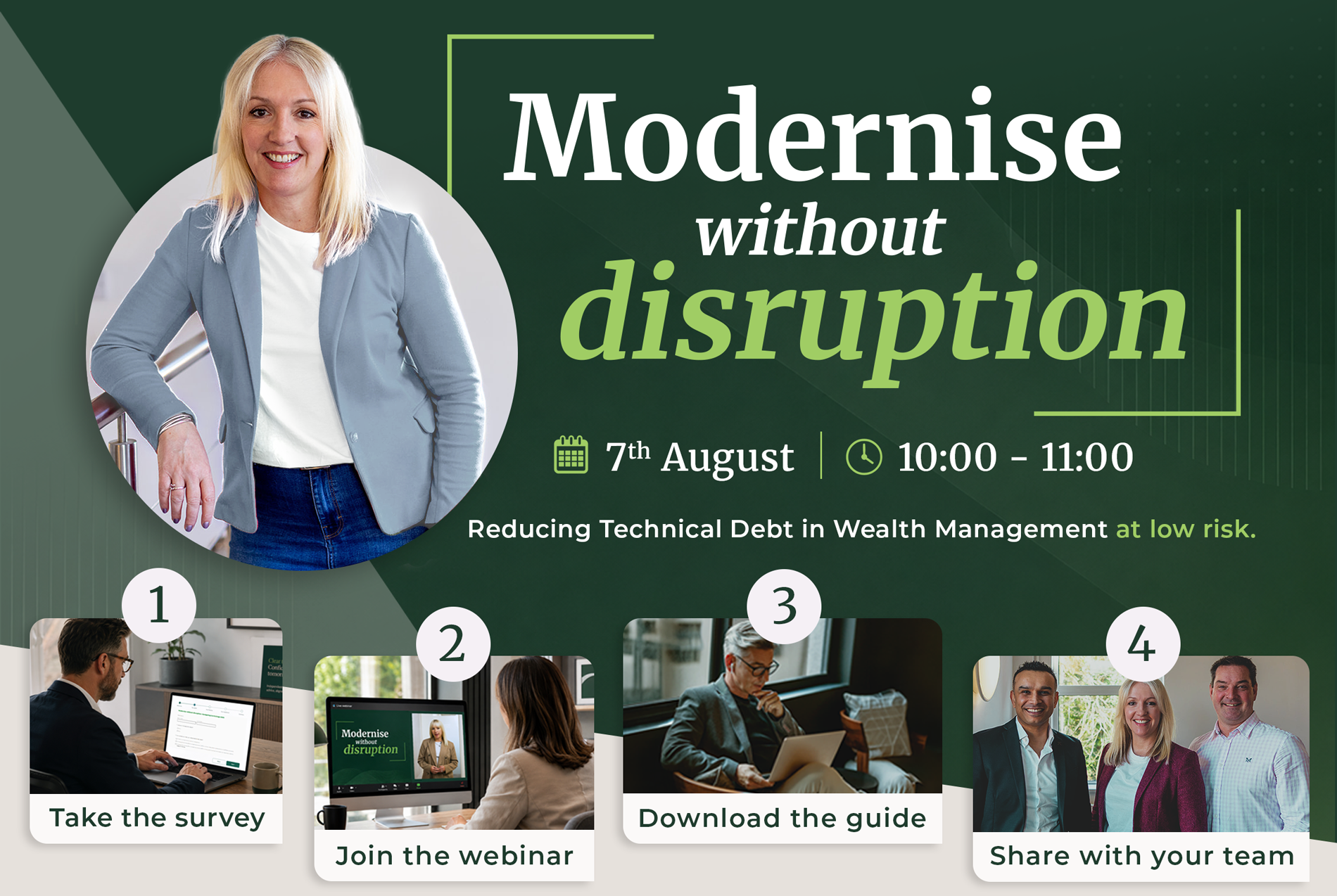
Register for the webinar on 7th August: Modernise without Disruption
We'll discuss why technology change becomes more difficult over time, how firms can recognise the signs of technical debt, and why some transformation programmes deliver lasting value while others create more complexity than they remove.
We'll also look at practical questions that every leadership team should be asking before committing to major change, including:
- How do you know whether you've got a technology problem or an integration problem?
- When is replacing a system genuinely the right decision?
- How can firms simplify their technology landscape without creating unnecessary disruption?
- What does successful modernisation actually look like?
My aim isn't to provide a blueprint that every firm should follow. Every business is different.
Instead, I want to share practical experience, challenge a few assumptions and hopefully give you a different way of thinking about technology change.
We'd value your perspective
Ahead of the webinar, we’re conducting research for ‘The UK Wealth Management Modernisation Index 2026’, a new industry report intended to give everyone a clearer picture of the challenges firms are facing across the industry.The survey takes less than seven minutes to complete and includes questions such as:
- What's making technology change difficult in your business?
- Which systems would you replace if you could?
- What gives you confidence that a technology project will succeed?

Tessa Lee, Managing Director at Moneyinfo
Tessa Lee has spent more than 30 years helping wealth managers and financial planners use technology to build stronger client relationships.
Starting her career in financial advice before moving into fintech, Tessa has worked through every major wave of technology change - from paper files and desktop software to cloud platforms, connected technology ecosystems and, more recently, AI.
As Founder and Managing Director of Moneyinfo, one of the UK's leading digital client relationship platforms for wealth managers and financial planners, she works closely with advice firms, wealth managers, platforms and technology providers to help solve the practical challenges of modernising technology, improving client engagement and connecting increasingly complex systems.
Having spent more than three decades working alongside the industry, Tessa has a unique perspective on why technology projects succeed, why others struggle, and how firms can modernise without creating unnecessary complexity or disruption. She is particularly passionate about helping firms make better use of the technology they already have, rather than assuming the answer is always another system.
A recognised industry speaker and commentator, Tessa is known for her practical, commercially grounded approach to digital transformation, AI and the future of financial advice. Her sessions focus on real-world challenges and practical ideas that firms can take away and apply to their own businesses.
Tessa is also co-founder of the Women in Finance Collective, a growing community supporting and championing women across the financial services profession.